Qualification Code:

BLS

Awarding Body:

Qualsafe Awards

Duration:

2.5 hours

Delivery Method:

Classroom

Cost:

£45 (VAT included)


Course Overview

Two and a half hours to be the person who starts CPR

Two and a half hours, £45 including VAT, and you can book a single place.

This is the short, practical course for anyone who might have to deal with an adult who collapses — at work, in a community setting, at a club or in a voluntary role. It concentrates on the few things that actually change the outcome: good chest compressions, early defibrillation, and a clear airway.

Why the AED part matters

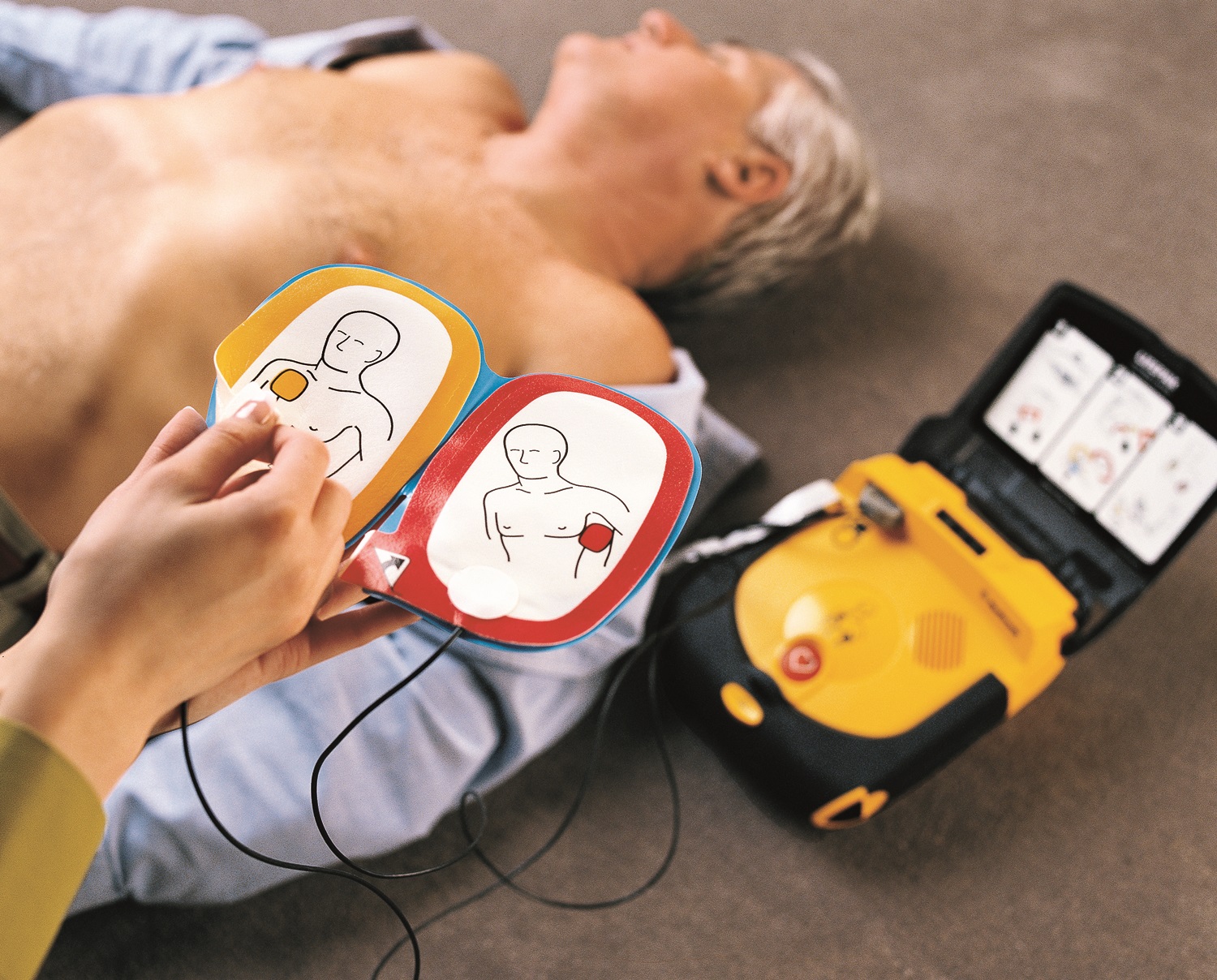
Survival from cardiac arrest falls sharply with every minute that passes before defibrillation. The machine talks you through it and will not shock a heart that does not need it — but people hesitate, because they have never touched one. Two and a half hours removes that hesitation.

If your workplace, club or village hall has installed a defibrillator, the box on the wall is only half the job. The other half is a few people who will not think twice about opening it.

Where you will train

Our Stockton-on-Tees centre, in dedicated simulation areas, with registered clinicians who still practise leading the session. One manikin per four learners and one AED trainer per four, so you spend the time doing it rather than watching.

What the session looks like

Two and a half hours, almost all of it hands-on. A short amount of theory to frame it, then compressions, rescue breaths, AED use and the recovery position, practised until they are automatic, finishing with scenario work in the simulation areas.

We run it at times that suit shift workers and community groups as well as office hours. Free parking directly outside.

Who this is for, and who it is not for

It suits anyone who wants to be useful when an adult collapses — workplace staff, club volunteers, community first responders, receptionists, security teams, families of people with cardiac conditions.

It is not a workplace first aid certificate. If your employer’s first aid needs assessment calls for a first aider, you need Emergency First Aid at Work or First Aid at Work. Many people do both — this one keeps resuscitation skills sharp between the longer courses.

It covers adults only. For infants and children, look at Paediatric First Aid or Emergency Paediatric First Aid.

On-site delivery

For groups of ten or more we will run this at your premises. For an organisation that has just installed a defibrillator, that is usually the sensible way to train everyone at once — on the actual machine, in the actual building.

  • Assessing the scene and your own safety
  • Recognising cardiac arrest — including agonal breathing, which is where people most often go wrong
  • Calling for help and what the ambulance service will ask you
  • Chest compressions — 5–6cm deep, 100–120 per minute, and minimising interruptions
  • Rescue breaths, and when compression-only CPR is appropriate
  • Safe use of an AED — pad placement, clearing the casualty, and the situations that need care: pacemakers, water, a wet chest, medication patches, excessive chest hair
  • The unresponsive casualty who is breathing — airway and recovery position, with continual monitoring
  • Choking in an adult
  • Handover to the ambulance crew, and what they need to know
  • Afterwards — the emotional impact of an arrest, and where to get support

Taught to Resuscitation Council UK Guidelines 2025. Published in October 2025, these replaced the 2021 guidelines and changed the opening sequence: call 999 for any unresponsive person before you check for breathing. If your last update was on the 2021 guidance, this is the course that brings you current.

A Qualsafe Level 3 regulated qualification in Adult Basic Life Support and Safe Use of an AED, valid for three years.

It forms part of the Qualsafe first aid suite and is built on Resuscitation Council UK guidance. Assessment is by practical demonstration during the session — there is no written paper.

Being clear about what this is

It is a focused resuscitation qualification, not a workplace first aid certificate. If your employer’s needs assessment calls for a first aider, you need EFAW or FAW instead.

It is also the qualification Qualsafe names as one of the recommended annual refreshers for existing first aiders — so if you hold FAW and want to keep your resuscitation skills current between requalifications, this is a sensible way to do it.

  • You are 14 or over.
  • You can kneel and perform CPR on a manikin on the floor. Tell us in advance if that is difficult — we can usually work round it.

No prior knowledge assumed. Plenty of people arrive having never done anything like it.

£45 including VAT per place — or £38.25 each when you book four or more.

Multiple booking discount

Employers booking four or more learners receive 15% off the total, including any optional services added at checkout.

Returning learners

Trained with us before? When you come back to requalify, take 10% off your refresher.

Course fee money-back 100% guarantee

Attend the course, complete the learning and follow your tutor’s guidance. If you still do not pass, we refund your course fee. On eligible courses.

Pay in full with Klarna

Choose Klarna at checkout and spread the cost on Klarna’s terms. Subject to Klarna’s eligibility checks.

Employer invoicing

Organisations booking several people can be invoiced rather than paying at checkout. Get in touch and we will set it up.

Community groups and volunteers

If you are a community group, sports club or voluntary organisation training people on a defibrillator you have raised funds for, get in touch before booking. We would rather help you work it out than have the cost stop you.

On-site delivery

For groups of ten or more we will run this at your premises, on your own machine. Ask for a quote.

Can I book a single place?

Yes. Scheduled monthly dates, one seat at a time, £45 including VAT. Most local providers only sell whole sessions to organisations.

Does this count as workplace first aid training?

No. It is a focused resuscitation and AED qualification. If your employer’s first aid needs assessment calls for a first aider, you need Emergency First Aid at Work or First Aid at Work. This sits alongside those rather than replacing them.

Can I use this as my annual refresher?

Yes. Qualsafe names it as one of the recommended annual refresher options for existing first aiders. It keeps your resuscitation skills current between three-yearly requalifications — but it does not extend your FAW or EFAW certificate, which still has to be requalified in its own right.

Do I need any experience?

None. Most people arrive having never used a defibrillator or done CPR outside a video.

Can an AED hurt someone if I use it wrongly?

It analyses the rhythm and will not deliver a shock to a heart that does not need one. The course covers the handful of situations that need care — pacemakers, water, a wet chest, medication patches — and after two and a half hours you will not hesitate.

What if I do CPR and get it wrong?

Someone in cardiac arrest is already clinically dead. Imperfect compressions are vastly better than none, and the course is built around getting you to start rather than freeze. Broken ribs happen and are not a reason to stop.

How long is it valid?

Three years, though resuscitation skills fade faster than that. An annual refresher is worth doing and is the standard most clinical settings work to.

We have just installed a defibrillator at work. Can you train everyone here?

Yes, for groups of ten or more. For a newly installed AED that is usually the most sensible route — everyone trains on the actual machine, in the actual building, and finds out where the pads are kept.

Is it suitable for children and infants?

No, this course covers adult resuscitation. For infants and children, look at Paediatric First Aid or Emergency Paediatric First Aid.

How many people share a manikin?

No more than four, which is the standard the awarding organisations set. You will get proper hands-on time rather than watching someone else.

Who teaches it?

Registered clinicians who still practise. For a course this short that matters — you want the person who has actually run an arrest, not someone reading from a script.

Are you teaching the current resuscitation guidelines?

Yes — Resuscitation Council UK Guidelines 2025, which replaced the 2021 guidelines in October 2025 and changed the opening sequence. Worth asking any provider, because not everyone has updated.

Where is the centre and is there parking?

Faraday House, Sopwith Close, Stockton-on-Tees TS18 3TT, with free parking directly outside. Straight off the A19 and A66.

Over 10,000 people have begun their clinical career with us.

We support NHS ambulance services, dental practices, community pharmacies, care providers and offshore operators. Here is what some of them say.

Want to know more?

Complete our short online form for more information about any of our programmes or to find out how we can work with your organisation to develop your employees

Get In Touch Today
Menu
Basket

No products in the basket.

Basket

No products in the basket.