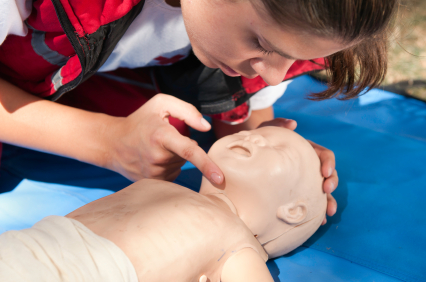
When a medical emergency happens, most people think about ambulances, hospitals and doctors. But in reality, the most important part of emergency care often happens before any professional arrives. The first few seconds and minutes after an incident can completely change the outcome for a patient.
That first action, making the emergency call, starting CPR, stopping a bleed, helping a choking child, can be the difference between life and death.
The Critical Minutes
The human body can only survive for a limited amount of time without oxygen or blood circulation. In cardiac arrest, every minute without CPR and defibrillation reduces the chance of survival significantly. The Resuscitation Council UK highlights the importance of immediate bystander CPR and rapid use of an Automated External Defibrillator (AED), with early intervention dramatically improving survival rates.
The problem is that emergency services, no matter how skilled or responsive they are, cannot be everywhere instantly. Even with fast ambulance response times, precious minutes pass before professional help arrives. Those minutes belong to the public, colleagues, friends, family members and passers-by who happen to be there first.
The reality is simple: the patient often depends on ordinary people taking immediate action.
CPR and AEDs Save Lives
Thousands of people in the UK suffer out-of-hospital cardiac arrests every year. Without intervention, survival rates are low. However, when CPR is started quickly and an AED is used early, the chances of survival increase dramatically.
CPR keeps oxygenated blood moving around the body and helps protect the brain and vital organs until advanced medical care arrives. AEDs are designed specifically so members of the public can use them safely. Modern AEDs talk the rescuer through every step and will only deliver a shock if it is needed.
People often worry about “doing it wrong”, but doing something is usually far better than doing nothing. A patient in cardiac arrest is clinically dead. Early action gives them a chance.
Bleeding Can Become Fatal Faster Than People Realise
Severe bleeding is another emergency where the first actions matter enormously. A person can lose a life-threatening amount of blood in just minutes. Immediate pressure on a wound, use of dressings, or in some cases a tourniquet, can slow or stop bleeding long enough for emergency services to take over.
Many preventable deaths from trauma occur because bleeding was not controlled quickly enough. This is why first aid training increasingly focuses on catastrophic haemorrhage control and helping the public recognise when bleeding is immediately dangerous.
Choking Emergencies, especially in Children
Choking is one of the most frightening emergencies because it happens so quickly. A completely blocked airway prevents oxygen from reaching the lungs and brain. Children are particularly vulnerable due to their smaller airways and tendency to place objects or food into their mouths.
In a severe choking emergency, waiting passively for an ambulance is not an option. Back blows, abdominal thrusts and prompt recognition of airway obstruction can save a life within seconds.
Many parents and carers say they never imagined they would need these skills, until the moment they did.
What if I get it wrong?
One of the biggest misconceptions about first aid is that it is complicated. In reality, many lifesaving interventions are simple, quick and designed for anyone to perform.
Calling for help early.
Starting CPR.
Using an AED.
Applying pressure to bleeding.
Helping a choking casualty.
Putting someone in the recovery position.
These are not medical actions reserved for professionals. They are anybody actions that buy time until ambulance care arrives.
Confidence Changes Outcomes
People who have attended first aid training are far more likely to step forward in an emergency. Training removes some of the fear and uncertainty that stop people from acting. It teaches not only skills, but confidence.
You may never know when you will be the closest person to an emergency. It could be at work, at home, on the street, at a sports event, or with your own child or family member.
In those moments, the first action may be the most important one.
And the person taking that action could be you.
Medipro is one of the only organisations in the UK that runs ‘open’ First Aid courses from our centre in Stockton-on-Tees in the heart of Teesside. You can book with us as a single person, you don’t need to arrange a group booking. You’ll attend our purpose built centre, with other people wanting to learn, just like you.
Click on our First Aid course page to see the course we offer and all the open dates.