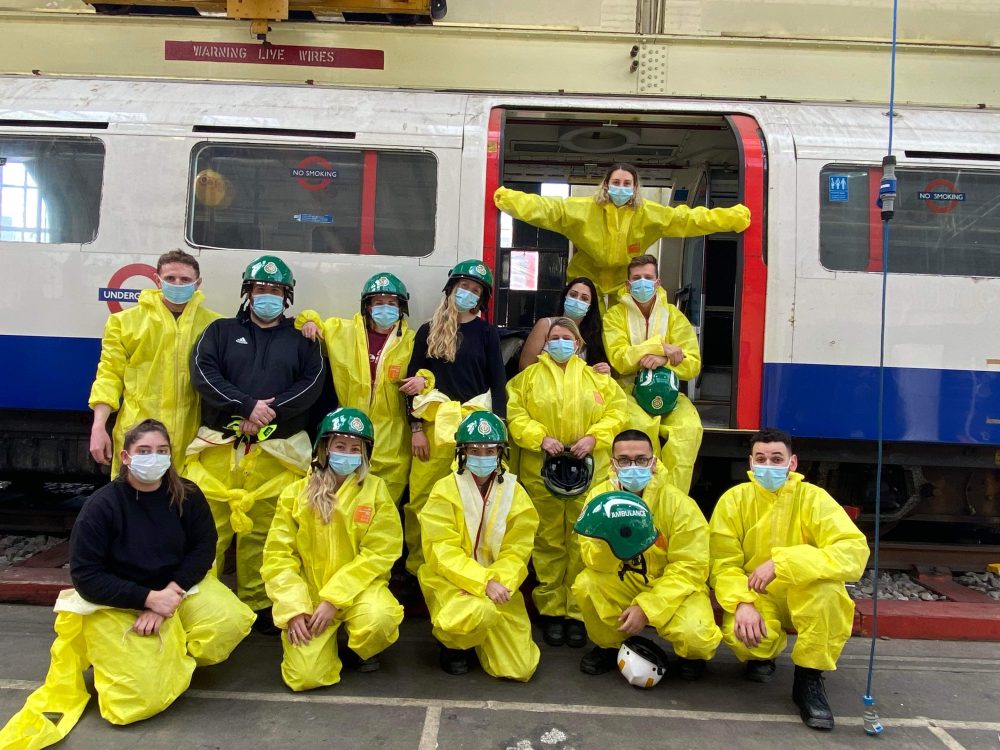
Supporting the London Ambulance Service Workforce – A Proven Model for Apprenticeship Success
The pressure on ambulance services across the UK has never been greater.
Rising demand, workforce shortages and changing patient needs mean organisations must rethink how they recruit, train and retain clinical staff.
At Medipro, we have worked closely with ambulance services to develop practical solutions that support workforce growth without disrupting operational delivery.
One of the most significant examples of this is our partnership with the London Ambulance Service.
A major recruitment challenge
Following the COVID-19 pandemic, the London Ambulance Service launched its largest recruitment drive for clinical staff. The organisation needed a scalable, high-quality training solution to support new clinicians entering frontline roles.
The service supports more than nine million people across London and is the busiest emergency ambulance provider in the UK. This meant any training programme had to balance speed, quality and operational resilience.
The priority was clear.
Recruit and train new ambulance clinicians quickly, while maintaining high clinical standards and protecting frontline resources.
Designing a programme around service needs
Medipro was awarded a contract to deliver apprenticeship education to more than 300 learners. Our focus from day one was to design a programme that worked around the operational realities of the ambulance service.
This included:
- Aligning training to governance and statutory requirements
- Mapping delivery to the Core Skills Training Framework
- Embedding the Care Certificate
- Ensuring equality, accessibility and learner support
We worked closely with clinical and education leads to ensure the programme supported real-world practice and clinical competence.
This collaborative approach is now central to how we design all apprenticeship programmes.
Blended delivery that supports operational capacity
A key factor in the success of the programme was our blended learning model.
We established a dedicated training centre in London and provided experienced tutors, simulation equipment and clinical training resources. At the same time, learners accessed online study materials through our learning platform.
This allowed learners to build knowledge and confidence while minimising disruption to operational rotas.
Apprentices were able to develop both technical skills and decision-making through:
- Hands-on simulation
- Structured clinical education
- Interactive online resources
- Regular tutor feedback and progress tracking
This approach also enabled the ambulance service to maintain control of operational elements such as emergency response driving.
Supporting learners to succeed
Each apprentice was allocated a dedicated tutor who provided ongoing monitoring and support. Learners also had access to safeguarding services, functional skills support and tailored learning resources.
Where additional support was needed, we adapted the programme to meet individual requirements. This included one-to-one coaching, accessible learning materials and flexible delivery.
We also introduced multidisciplinary learning opportunities. Apprentices participated in simulated incidents alongside partners such as fire and rescue and transport services. These experiences helped build confidence and resilience.
This focus on learner support is critical.
It ensures apprentices are not just trained but prepared for real operational practice.
Strong outcomes that exceed national benchmarks
The results demonstrated the effectiveness of this model.
The programme achieved:
- 77% pass rate within 18 months
- 90% retention
- 62% distinction at End Point Assessment
At the time, national achievement rates in the sector were significantly lower.
These outcomes reflect a structured, supportive and employer-aligned approach to apprenticeship delivery.
More importantly, many learners progressed into further development and paramedic training.
Building a long-term workforce pipeline
This partnership shows how apprenticeships can support sustainable workforce planning.
Ambulance services and patient transport providers increasingly need:
- Clear career pathways
- Retention and progression
- High-quality training aligned to service needs
- Scalable recruitment models
A well-designed apprenticeship programme delivers all of these.
At Medipro, we have supported ambulance services across the UK to develop frontline staff, from ambulance support roles through to paramedic progression.
Why this matters now
Workforce challenges remain a national priority.
Apprenticeships offer a proven solution, but only when designed and delivered in partnership with employers.
The healthcare landscape has changed.
Services need flexible, responsive education providers who understand operational pressure and clinical governance.
Our experience with large-scale programmes demonstrates that apprenticeships can:
- Increase workforce resilience
- Improve retention
- Develop confident clinicians
- Support diversity and widening participation
- Create clear progression into advanced roles
Supporting ambulance and healthcare employers
If your organisation is reviewing workforce strategy, apprenticeships should be part of the conversation.
Whether you are an NHS Trust, independent ambulance provider or patient transport service, we can support:
- Workforce growth
- Upskilling existing staff
- Career progression
- Levy utilisation and funding
- Flexible delivery models
We work collaboratively with employers to design programmes that align with service priorities.
Find out more
To learn how Medipro can support your organisation, contact our team or explore our apprenticeship programmes. To view the full case study, click HERE
We are always open to discussions with healthcare providers looking to strengthen their workforce and improve patient care.